Why Your Hormones, Your Weight, and Your Chronic Conditions Shouldn’t Be Managed by Three Different Doctors
A woman in her mid-40s goes to her primary care physician with a cluster of complaints: fatigue, weight gain despite no changes to her diet or exercise, sleep disruption, and a low-grade irritability that has become her new normal. Her doctor orders some labs, tells her everything looks fine, and suggests she see a therapist for the stress and a rheumatologist for the joint pain she mentioned almost as an afterthought.
The rheumatologist finds nothing remarkable. The therapist is helpful but doesn’t change the underlying picture. Six months later she’s seeing an endocrinologist for a thyroid question, and a gynecologist who mentions perimenopause but doesn’t treat it. Meanwhile, nobody has looked at her full picture. Every specialist she sees knows one piece of it. Nobody owns all of it.
This is the referral carousel. And for millions of women in midlife who are navigating the intersection of hormonal changes, metabolic shifts, and chronic conditions it is the primary reason they don’t get better.
The Problem Isn’t Any One Doctor. It’s the System.
To be clear: the specialists in this scenario are often excellent at what they do. The problem isn’t competence, it’s coordination.
When your hormones are managed by one provider, your weight by another, your primary care by a third, and chronic conditions by a fourth (or multiple), no one is looking at how all three interact. And they do interact…deeply, constantly, and in ways that matter for your treatment and your outcomes.
Estrogen and cortisol affect insulin sensitivity. Insulin resistance affects weight, mood, and energy. Thyroid function affects virtually everything. GLP-1 medication changes how your body responds to food and affects hormonal balance. BHRT can influence cardiovascular risk, bone density, and metabolic function. Chronic inflammation affects your cells, tissue, and organs. Sleep affects all of it.
These systems are not separate; and treating them as if they are and routing each one to a different specialist who communicates with no one else produces fragmented care that consistently underserves patients.
What Actually Happens When Care Is Fragmented
Contradictory treatment approaches. One provider recommends a medication that another provider, if they knew about it, would flag as interacting with something else in your protocol. No one has the whole list and no one is cross-referencing it.
Symptoms that fall through the cracks. When a symptom doesn’t fit cleanly into any one specialist’s domain, it gets passed around or quietly dropped. The brain fog that might be thyroid, hormonal, or metabolic, but could also be a medication side effect doesn’t belong to anyone’s specialty, so no one pursues it seriously.
Redundant testing, redundant costs. Every new specialist orders their own labs. You pay for the same panels multiple times. The results sit in different portals that no one is reading together.
A patient who has to be her own care coordinator. In the absence of anyone connecting the dots, the patient fills that role herself. She carries the records, explains her full history at every new appointment, and tries to synthesize the conflicting advice she’s received. This is not a reasonable expectation. It is the default.
Hormones, Weight, and Chronic Conditions: Why Integration Matters
The Hormonal Picture
Bioidentical hormone replacement therapy for women navigating perimenopause and menopause is not a set-and-forget protocol. It requires baseline testing across a full hormone panel, individualized dosing, and ongoing monitoring as the body responds. It also requires a physician who understands how hormonal shifts interact with thyroid function, metabolic health, and cardiovascular risk.
A provider managing only your hormones, in isolation, is missing half the picture. Estrogen doesn’t operate independently of everything else in your body. Neither does progesterone or testosterone. A physician who knows your whole health history can make calibrated, informed decisions about hormone therapy in a way that a hormone-only clinic simply cannot.
The Weight and Metabolic Picture
GLP-1 medications like semaglutide and similar agents, have become one of the most powerful tools available for managing weight and metabolic health. They are also one of the most misused, as access has outpaced oversight. Prescribing GLP-1 therapy without monitoring for muscle preservation, without titrating carefully against individual tolerance, without tracking metabolic markers, and without understanding how the medication interacts with a patient’s hormonal status is not good medicine.
Weight and metabolism are also closely connected to hormones. Women with untreated hormonal imbalances often find that weight management is nearly impossible regardless of effort because the underlying hormonal disruption is working against them at the metabolic level. Treating weight in isolation from hormones ignores one of the primary drivers.
The Chronic Conditions Picture
This is where the DO difference becomes most concrete.
Doctors of Osteopathic Medicine are trained in a whole-body, integrative approach to care — one that emphasizes how body systems relate to and affect one another, rather than treating each organ system in isolation. That training is what allows a DO with deep clinical experience to manage conditions that conventional primary care frequently routes to specialists.
Thyroid disorders. Autoimmune conditions. Metabolic syndrome. Chronic fatigue. Joint and musculoskeletal pain. Cardiovascular risk management. In the conventional model, each of these generates a referral. In an integrative DPC model with a physician who knows your full history, many of them can be managed right here.
Fewer handoffs means fewer gaps, and fewer gaps means better outcomes for you.
Why Direct Primary Care Makes This Possible
The reason integrated care is rare in conventional medicine isn’t that physicians don’t value it. It’s that the system doesn’t allow for it.
A 15-minute appointment cannot accommodate a physician who wants to understand the full picture. A practice built around insurance billing and patient volume cannot support the kind of ongoing, longitudinal relationship that lets a doctor notice when something is shifting before it becomes a problem. Specialty care gets outsourced not because specialists are always necessary, but because primary care has been structurally limited to doing less.
Direct Primary Care removes those constraints. A flat monthly membership instead of insurance billing means the practice runs on the relationship, not the transaction. Appointments are longer, access is same-day or next-day, and the physician has time to look at the full picture, review all of your labs together, and coordinate your care rather than hand it off.
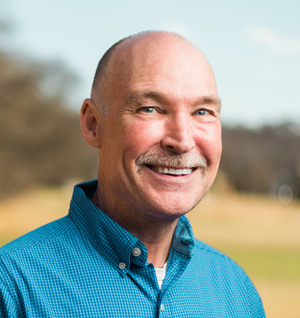
At Madsen Medical, Dr. Madsen is a Doctor of Osteopathic Medicine with 38 years of medical practice. He manages BHRT, GLP-1 therapy, complex chronic conditions, and whole-person primary care for patients who have often spent years being passed from specialist to specialist without ever having someone look at all of it together.
That is what this practice is built to do.
Frequently Asked Questions
What does it mean for a physician to manage my “whole picture”?
It means your primary care, hormone therapy, your weight management protocol, your chronic conditions, your labs, your medications, and your symptoms are all being evaluated by one physician who knows your history and who is looking for how they connect, not treating each one as a separate problem. That kind of integrated oversight changes what’s possible in terms of both diagnosis and treatment.
Can a primary care physician really manage conditions that specialists typically treat?
A DO with extensive training and clinical experience can manage a wider range of conditions than a conventional primary care model typically allows, not because they’re a specialist in the narrow sense, but because they’re trained to treat the whole person and have the time, in a DPC model, to do it thoroughly. For complex or rare conditions, specialist referrals are still appropriate and available. For many of the chronic conditions that generate routine referrals, a knowledgeable integrative physician can manage them more effectively and continuously than a one-time specialist visit.
I’m already seeing a specialist for one of my conditions. Does that mean I can’t use Madsen Medical?
Not at all. Many patients see Dr. Madsen as their primary care physician while maintaining a relationship with a specialist for a specific condition. The difference is that Dr. Madsen can review and coordinate that care, keep an eye on how specialist recommendations interact with your broader health picture, and often reduce the need for additional specialist visits over time.
Is BHRT something that gets managed differently in an integrated model?
Yes. In a physician-led integrative practice, hormone therapy is evaluated alongside your full metabolic panel, your thyroid function, your sleep, and your overall symptom picture, not just your estrogen and progesterone levels in isolation. That broader context produces better-calibrated protocols and more responsive adjustments over time.
How do I know if this kind of integrated care is right for me?
The clearest sign is a feeling of fragmentation. When you’re seeing multiple providers, getting advice that doesn’t quite connect, having symptoms that nobody is fully addressing. If that describes your experience, it’s worth having a different kind of conversation.
One Physician. Your Whole Picture.
If you’ve been moving between providers without anyone putting it all together, that’s not a you problem. That’s a system problem. And there’s a different way to do this.
Madsen Medical is accepting new patients in Chillicothe and across Southern Ohio. The first step is a consultation with Dr. Madsen. There is no commitment, no pressure, just a conversation about what you’re experiencing and whether our approach is the right fit.
Call us at (740) 200-3860 | 192 S. Paint Street, Chillicothe, Ohio 45601
Madsen Medical is a Direct Primary Care practice in Chillicothe, Ohio, serving women and families throughout Ross County and Southern Ohio. Dr. Madsen, DO, has been practicing medicine for 38 years.
This blog has been reviewed by Dr. Daniel Madsen at Madsen Medical. This post is for informational purposes and does not constitute medical advice. Speak with a qualified healthcare provider before starting or changing any treatment protocol.